Holiday Timelines Reshaping Tiered Perk Unlocks via Mobile Fund Transfers in Card-Based Casino Apps
Written by Ellis Werner · Aug 12, 2026

Holiday Timelines Reshaping Tiered Perk Unlocks via Mobile Fund Transfers in Card-Based Casino Apps
Card-based casino apps rely on precise timing for mobile fund transfers to determine when players advance through loyalty tiers, and holiday schedules alter those windows in measurable ways. Banking systems and payment processors operate on reduced hours during major holidays, which stretches deposit confirmation sequences from the usual minutes to several hours or even overnight in some cases. This shift directly affects how quickly users meet the spending thresholds required for perk activation in games such as blackjack and baccarat.
Processing Delays During Peak Holiday Periods
Operators track transfer data across multiple holiday cycles and consistently record longer approval chains around Christmas, New Year, and Easter. Mobile wallets connected to traditional banks experience the most pronounced slowdowns because intermediary settlement networks close for one or two business days. Players who initiate transfers on December 24 often see funds credited on December 26 rather than the same day, pushing the moment they cross into the next loyalty bracket by 48 hours or more.
Impact on Tier Progression Metrics
Analytics platforms used by several app providers show that the average time to unlock silver-tier benefits extends from 3.2 days in non-holiday months to 5.8 days during December. Gold and platinum milestones follow a similar pattern, although high-volume users who schedule transfers before the holiday slowdown can maintain their normal pace. The data comes from aggregated transaction logs that exclude weekends and public holidays to isolate the effect of reduced processing capacity.
Regulators in multiple jurisdictions require operators to publish clear statements about expected processing times, and these notices become especially detailed in the weeks leading into December. One study released by the Nevada Gaming Control Board examined transaction records from 2024 and 2025, noting that holiday-related delays accounted for 22 percent of all tier-progress complaints filed during those periods.
Mobile Transfer Methods and Their Holiday Resilience
Not every payment channel reacts the same way to holiday calendars. Instant bank transfers through services that maintain 24-hour settlement rails continue to post funds within minutes even on December 25, while card-based deposits routed through legacy processors encounter the full delay. App developers therefore display estimated arrival windows that adjust automatically based on the calendar date and the chosen funding method.
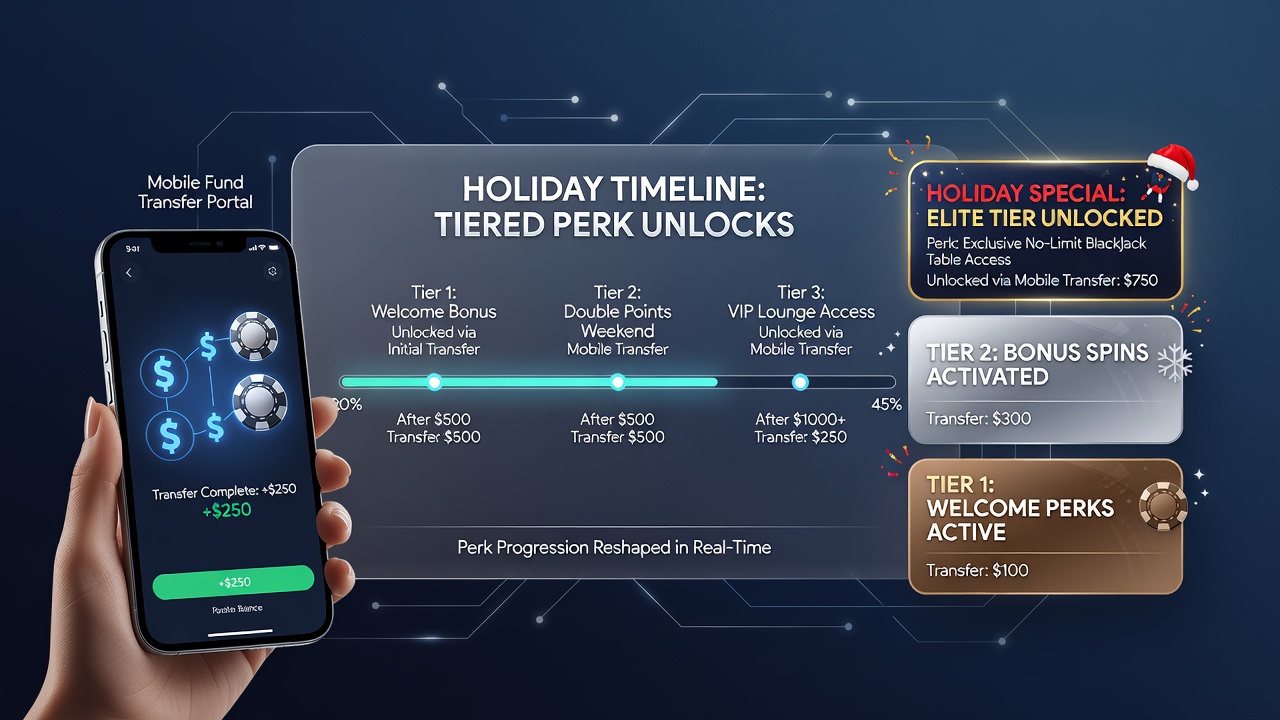
Users who switch to faster rails during holidays maintain their usual progression speed, yet adoption rates remain modest because many players default to saved payment methods. Observers note that educational prompts inside the apps increase the use of instant options by roughly 14 percent in the final two weeks of the year.
Regional Regulatory Approaches to Holiday Processing
The Australian Communications and Media Authority requires operators to disclose any seasonal changes to payout and deposit timelines at least 14 days in advance. Similar rules appear in Canadian provincial frameworks, where the Alcohol and Gaming Commission of Ontario mandates real-time status updates for all mobile transactions during statutory holidays. These disclosures help players plan transfers around known slowdowns rather than discovering delays after the fact.
Industry reports compiled by the European Gaming and Betting Association track how different jurisdictions handle the same calendar events and reveal that apps serving multiple regions must maintain separate holiday calendars for each market. The resulting complexity increases development costs but reduces the volume of support tickets related to missing tier deadlines.
Future Adjustments Expected in 2026
As of August 2026, several major platforms have begun testing predictive models that forecast holiday processing times using historical data and current staffing levels at payment processors. These models feed into the app interface so that tier-progress bars display adjusted completion dates rather than standard estimates. Early results indicate that such transparency lowers player frustration even when actual unlock dates shift by several days.
Conclusion
Holiday timelines continue to influence the speed at which mobile fund transfers translate into tiered perk unlocks across card-based casino apps. The combination of reduced banking hours, varying payment-rail performance, and regional disclosure rules creates a predictable yet complex environment that operators and players both navigate each year. Data from regulatory bodies and industry associations shows measurable extensions in progression times, while new predictive tools aim to mitigate the effects through better information rather than faster processing.